Summer fundamentally shifts the operational climate for small businesses. For some, June through August marks an intense, high-stakes sprint of seasonal consumer demand and rapid scaling.
For others, it triggers a multi-month drought as clients pause projects and head out of the office on vacation. This stark transition introduces unique operational friction: supply chain overhead fluctuates wildly, payment cycles stall out, and standard administrative routines easily break down when the warm weather coaxes you away from your computer.To keep your operations organized and your profit margins intact during this seasonal stretch, manual tracking and lagging spreadsheets won’t cut it. You need real-time, centralized financial visibility.
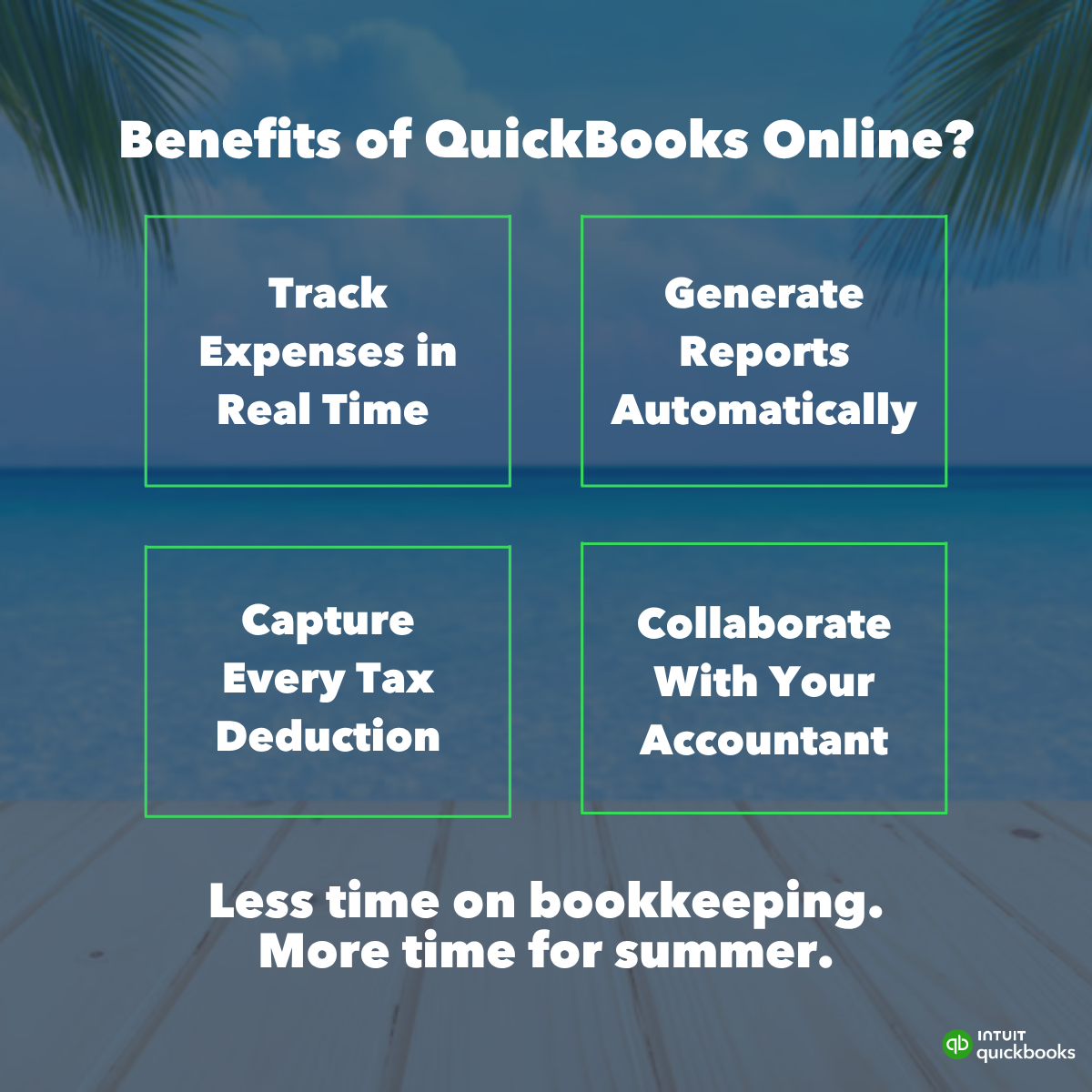
QuickBooks acts as your digital operational anchor, automating the heavy administrative lift so you can maximize cash flow without spending your summer trapped behind a desk.Here are three distinct ways QuickBooks keeps your small business lean, hyper-organized, and highly profitable all summer long.
—## 1. Neutralizing Seasonal Dips via Smart Capital Runway ForecastingCash flow predictability often disintegrates when summer hits. High-volume seasonal ventures face a steep upfront capital hurdle: they must deploy massive amounts of cash for bulk inventory, specialized field equipment, and temporary payroll weeks before the peak summer revenue actually hits their accounts. Conversely, B2B firms face a completely different headache—extended invoice lifecycles caused by client accounts payable departments operating on skeleton vacation schedules.QuickBooks neutralizes this financial whiplash through its dynamic **Cash Flow Dashboard** and predictive modeling tools. By linking directly to your business checking accounts, credit lines, and open invoices, the software looks forward rather than backward, mapping out your financial runway weeks in advance.* **Proactive Cash-Crunch Detection:** The platform continuously cross-references your fixed overhead—such as recurring software subscriptions, utilities, and tax liabilities—against your expected customer payouts. If a major client historically takes an extra 20 days to settle bills during the summer months, QuickBooks automatically factors that trend into its calculations, giving you an early warning to preserve capital.* **Risk-Free “What-If” Projections:** Summer frequently drops unexpected, time-sensitive growth opportunities on your desk, such as a bulk inventory discount from a supplier or a sudden municipal project bid. QuickBooks lets you simulate these decisions before spending a dime. You can plug in a hypothetical expense (e.g., hiring three temporary delivery drivers) to see exactly how it will alter your cash balances by late August, allowing you to scale confidently without risking a cash squeeze.> **Summer Profit Tactic:** Use the QuickBooks Cash Flow Planner to isolate your historically slow “dry weeks” in late summer. Use this insight to launch targeted, early-bird promotions or prepaid service packages in June to build a secure cash cushion before the market dips.
—## 2. Locking In Revenue Early via On-Site Mobile BillingWhen the weather is clear, your business happens out in the field—on job sites, at pop-up markets, or in face-to-face client consultations—not cooped up inside a back office typing out invoices. However, waiting until Sunday evening to handle your billing severely bottlenecks your income. An invoice sent a week late frequently results in a client payment that arrives a month late, starving your business of liquid capital right when seasonal demands are highest.QuickBooks bridges the gap between field execution and back-office accounting by putting a complete billing and collection suite directly on your smartphone.* **Real-Time Field Billing:** With the QuickBooks mobile app, field technicians, contractors, and mobile consultants can create and email professional, line-item bills the exact moment a job wraps up. Your customers receive the invoice before you even leave their property, capturing their attention while the value of your work is top of mind.* **Frictionless Digital Payment Rails:** Invoices sent via QuickBooks feature native “Pay Now” options, allowing clients to clear their balances immediately using credit cards, debit cards, Apple Pay, or secure bank transfers (ACH). Reducing payment friction slashes your accounts receivable lifecycle, often turning a multi-week waiting game into an instant deposit.* **Hands-Off Collection Automation:** Chasing down late payments is an uncomfortable, time-consuming chore that drains your productivity. QuickBooks allows you to configure customizable, automated email reminders that gently nudge clients when an invoice is approaching its due date or overdue. Your cash flow stays steady without requiring a single manual follow-up call.
—## 3. Insulating Net Margins with Automatic Expense Capture and Real-Time Job CostingSummer business travel and field operations move at a blistering pace. Between purchasing extra fuel for work vehicles, buying client hospitality supplies, ordering emergency materials, or funding seasonal marketing pushes, small expenses multiply rapidly. When your team is moving quickly, paper receipts get stuffed into vehicle glove compartments, ruined by heat, or lost entirely—leaving thousands of dollars in legitimate tax deductions and reimbursable expenses completely off the books.QuickBooks eliminates this operational leak by replacing physical clutter with instant digital capture, keeping your expenses perfectly reconciled to protect your net profit margins.
* **Snap-and-Forget Receipt Scanning:** The moment you or an employee makes a business purchase, use the QuickBooks app to snap a photo of the physical receipt. The platform’s optical character recognition (OCR) instantly extracts the vendor, date, amount, and tax data, matching it to your corporate bank feed and archiving an audit-ready digital original while you discard the paper.
* **Granular Project and Job Costing:** To stay profitable, you need to know exactly which products, services, or projects are yielding the highest returns. QuickBooks allows you to tag expenses to specific clients or active summer projects. If you are managing multiple jobs simultaneously, you can see at a glance whether material costs and labor hours are staying under budget or quietly eating away at your profit margins in real time.> **Operational Travel Checklist:** Before taking off for summer vacation, ensure your business credit cards are fully integrated with QuickBooks. The system will quietly import and categorize your expenses while you step away, keeping your books perfectly accurate without any manual data entry required on your trip.
—## Conclusion: Systemize Your Summer for Sustainable GrowthThe small businesses that thrive year-over-year are those that refuse to let seasonal transitions disrupt their operational structure. Summer should be an opportunity to scale your revenue or enjoy some well-deserved personal downtime—not a source of administrative anxiety and financial guesswork.By leveraging QuickBooks to predict cash flow shifts, capture field revenue instantly, and automate your expense tracking, you build a resilient operational framework. This automation keeps your business hyper-organized, protects your hard-earned profit margins, and gives you the peace of mind to enjoy the season knowing your financial foundation is rock solid.